It started to look like Christmas
Born Helmut Herzfeld in 1891, Heartfield originally trained in advertising but the senseless destruction of World War One radicalised him both politically and aesthetically. He adapted the anglicised version of his name in defiance of the anti-English sentiment then sweeping through Germany. And he began experimenting with the perception-altering powers of photomontage together with his friend, the artist George Grosz, in 1916. The art form – where two or more photos are combined to create new images – would become central to their practice within Berlin Dada. The pair joined the art movement in 1917, where they would meet fellow photomontage artist Hannah Höch.
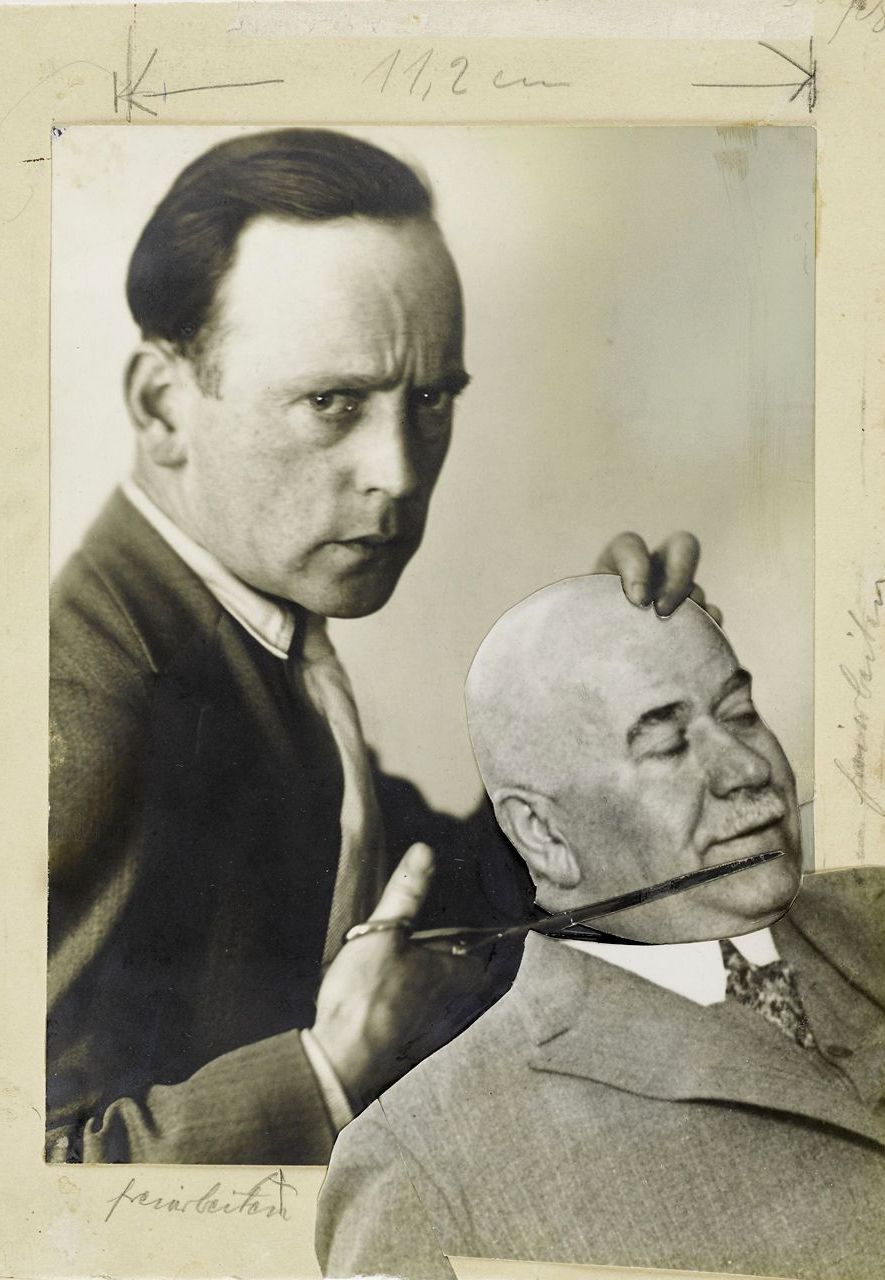
Use Photo as a Weapon! (1929) sees the artist cutting off the head of the Berlin police chief (Credit: Akademie der Künste)
Dada encouraged a deliberately confrontational and explosive approach to composition, but once Heartfield left the group he learned to fine tune the number of elements in his work to create a greater impact. His designs reached a particularly high level of sophistication while working in the propaganda department of the German Communist Party (KPD), which he had enthusiastically joined in 1918. It was here that he created his iconic election poster Five Fingers Has the Hand (1928). The image cleverly suggests the power of the worker to grasp the enemy, while also alluding to the number that the Communist Party had been given in the upcoming Reichstag elections ballot.